
Digital marketing has become the foundation of modern business strategies.
With the constant evolution of online platforms, from social media to AI search, companies are increasingly focusing on digital channels to engage their target audience and drive business growth.
The Rise of Digital Marketing
Digital marketing is very broad as it includes all marketing activities that take place online. It leverages a variety of tactics to reach and engage target audiences across a range of channels.
Digital marketing allows companies to connect with their target audiences on a more personal level to strengthen relationships and enhance brand loyalty by utilizing tools to study customer behavior and preferences. This data-driven approach enables the creation of highly tailored and effective campaigns. This has ushered in the age of more engaging, interactive, and customer-focused marketing.
Why is Digital Marketing Important?
These digital tools have ushered in the age of more engaging, interactive, and customer-focused marketing. By adopting digital marketing strategies, companies can do more than just stay afloat, they can flourish in an ever-changing environment where adaptability is the key to success.
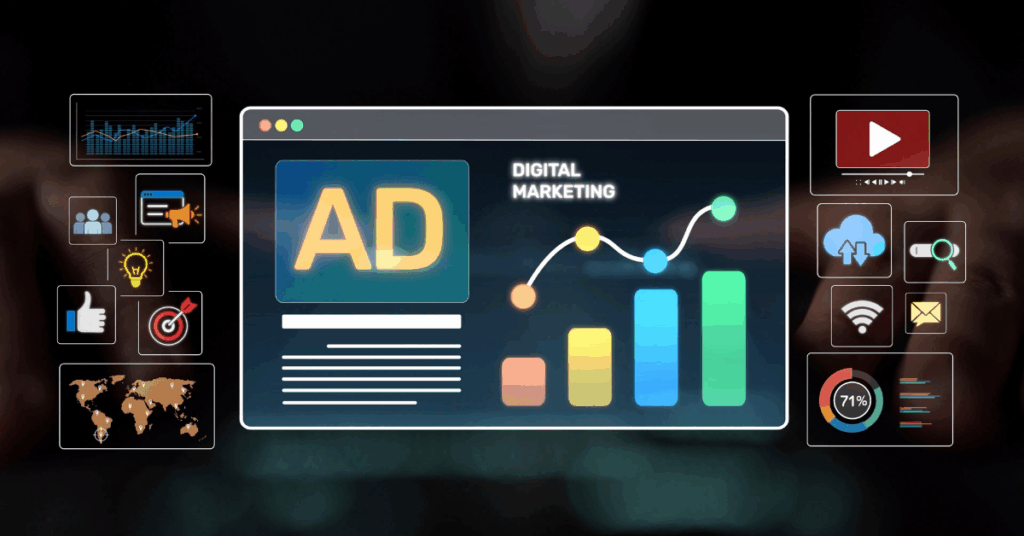
Benefits of implementing a digital marketing strategy include:
- Measurable Results: To ensure a marketing strategy works, its successes – and failures – must be tracked over time. Companies can track click and conversion rates, leads, website traffic and more, providing plenty of insight that can help grow and improve a company’s digital presence.
- Reach Target Audience: Digital marketing enables companies to target specific demographics, ensuring that their messages reach the most relevant audiences with precision. By leveraging data analytics, marketers can personalize content to align with individual preferences, behaviors, and interests.
- Real-time Engagement: By leveraging social media, email marketing, and other digital platforms, businesses can interact with customers in real time, strengthening relationships and cultivating lasting loyalty. Coupled with intent data, companies can interact with customers wherever they are in their buyer’s journey.
- Adaptability: Digital marketing strategies can be quickly refined in response to performance insights, enabling continuous improvement and optimization. This adaptability empowers companies to remain agile and responsive in an ever-evolving marketplace.
6 Effective Digital Marketing Strategies
Digital marketing opens up a range of strategies to increase brand visibility, foster audience engagement, and drive tangible results in an ever-evolving digital realm.
- Content Marketing
Content marketing involves producing engaging, high-quality material designed to resonate with your target audience. At its core, content marketing seeks to inform, entertain, and inspire. This can take the form of blog posts, whitepapers, or social media content.
Rather than directly promoting a product or service, content marketing focuses on delivering valuable information to the audience using a customer-first mindset. This approach builds trust with consumers while expanding your company’s reach and credibility.
- Search Engine Optimization (SEO)
SEO continues to serve as the foundation of organic traffic. When users enter a query into Google and other search engines, multiple factors are evaluated to determine which pages to display, including relevance, content quality, and site authority. Without proper optimization, your company’s website risks remaining invisible to potential customers. Organic search traffic remains one of the most reliable and cost-effective sources of leads and visitors.
3. Generative Engine Optimization (GEO)
GEO focuses on refining and directing generative AI tools to capture your content when users search on AI platforms like ChatGPT, Claude, and AI searches within Google and other traditional search platforms. Zero-click searches often result from these queries, but the source citations linked in the results still offer a boost to brand awareness and trust. This is a good example of digital tool evolution and why it’s important to adapt your strategy as technology changes.
4. Email Marketing
Email remains one of the oldest yet most effective forms of online communication, continuing to guide customers through the sales funnel and boost conversions.
As businesses move away from relying on third-party cookies on platforms like Google, email has become increasingly vital. Serving as a first-party data channel, email enables companies to maintain direct communication and drive conversions more efficiently.
5. Pay-Per-Click (PPC) Ads
PPC ads provide a direct way to drive traffic and conversions with a modest and flexible budget. Paid advertising offers instant visibility across search engines and other digital platforms like social media, allowing precise audience targeting through keywords, demographics, and user behavior. It also provides full control over budgets and performance tracking, enabling quick adjustments to campaigns for optimal ROI and adaptability to changing market conditions.
6. Social Media Marketing
Social media marketing has rapidly become a core element of modern marketing strategies, allowing brands to connect with audiences, strengthen loyalty, and promote their offerings through interactive engagement. With billions of active users, it provides an unmatched opportunity to build communities, share engaging content, interact directly with customers, and leverage influencer and industry expert partnerships to enhance credibility and influence purchasing decisions. Be sure to test strategies for both organic and paid social media opportunities to find what resonates with your audience the best.
A Digitally Driven Future
The digital world isn’t slowing down, and neither should your marketing strategy. By embracing strategies like SEO, content marketing, social media, email, and PPC, your company can strengthen your online presence and foster meaningful customer relationships. In an increasingly digital world, success belongs to the brands that embrace innovation, adapt quickly, and connect authentically with their audience.